 Rachel
Haughenberry, san-kyu writes:
What an incredible experience. It was a wonderful opportunity to be
able to participate in a practice led by Ohshima Sensei. At 11 AM on
Sunday, right before practice began, Mr. Ohshima went down the line to
make sure that everybody was in order by seniority. He then wanted to see
how many special trainings we'd made. He would call out "10 special
trainings....9 special trainings....etc." and we would acknowledge our
number by raising our hands. He then stressed to us how important special
training is to our practice.
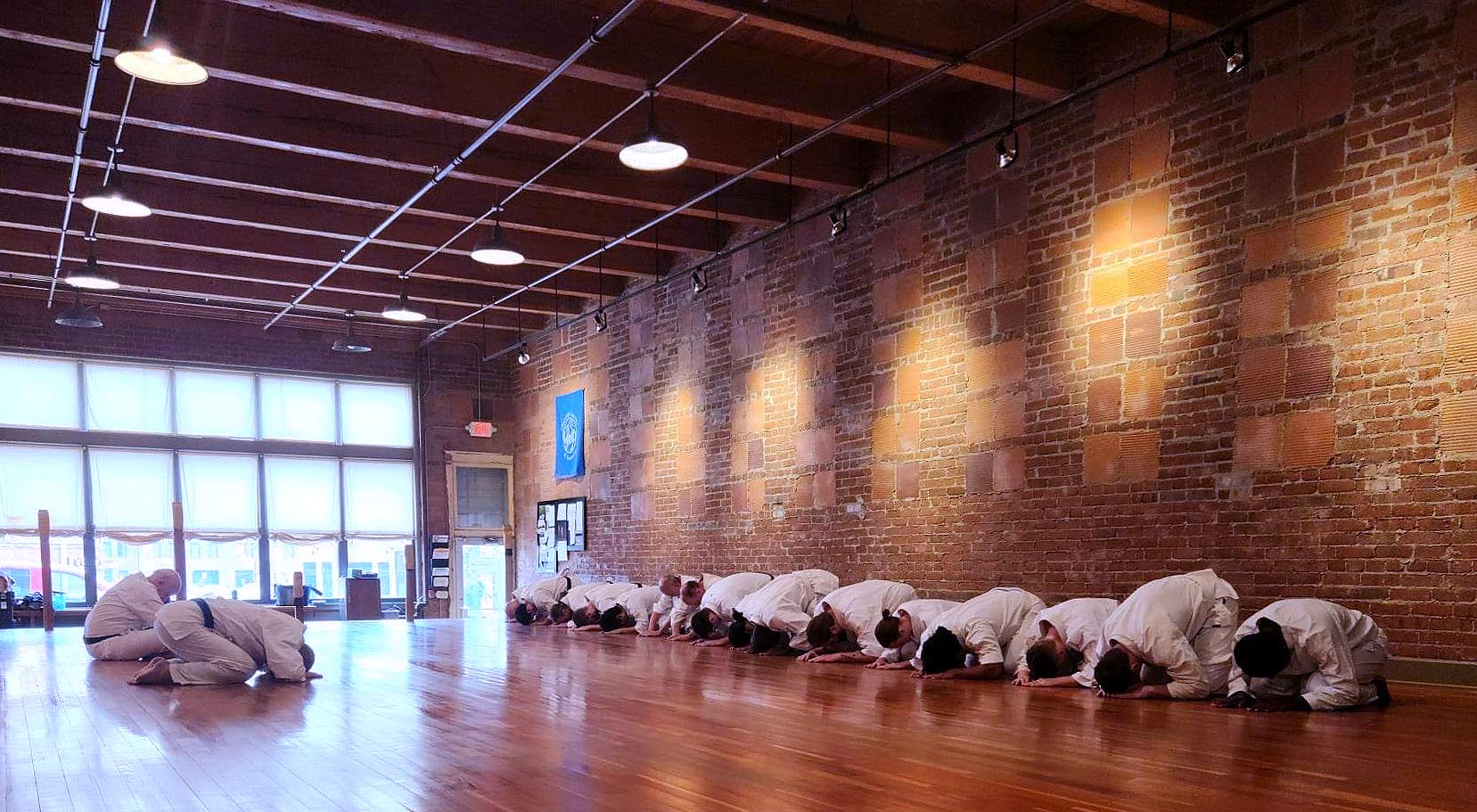
Right before Mokuso, Mr. Ohshima instructed us on exactly how we should
sit. He said that we should sit in Mokuso as if there was a pole going
through the top of our head down our backs to the floor. I have heard some
of our seniors say this before, and I think that I finally realized what
this should feel like. Maybe. Then he had us practice breathing from the
tanden while seated in Mokuso. He emphasized that the person next to you
should not be able to hear you breath and your shoulders should not move
at all.
After Mokuso, Mr. Ohshima had us stand up and do some stretching.
During the stretching he had us wind our arms from the back to the front
and stopping with our arms outstretched right in front of our shoulders.
They should then be left like this for about a minute or so, then repeat.
This exercise was to give us the feeling of rounded shoulders. During this
exercise our shoulder blades should not stick out at all in our backs. If
your shoulder blades stick out, then you have to be using power in the
upper body. He went around to check and sure enough, my shoulder blades
were sticking out and I didn't even realize it. After he pointed this out
to me, I started to better understand what the feeling of rounded
shoulders should be. That was a great exercise and I have done it quite a
few times since last Sunday. He then had us wind our shoulders the
opposite way, from the front through the back and stopping in the same
place, right in front of your shoulders. It definitely made me more aware
of my shoulders when I switched directions. I had to get the feeling of
rounded shoulders all over again.
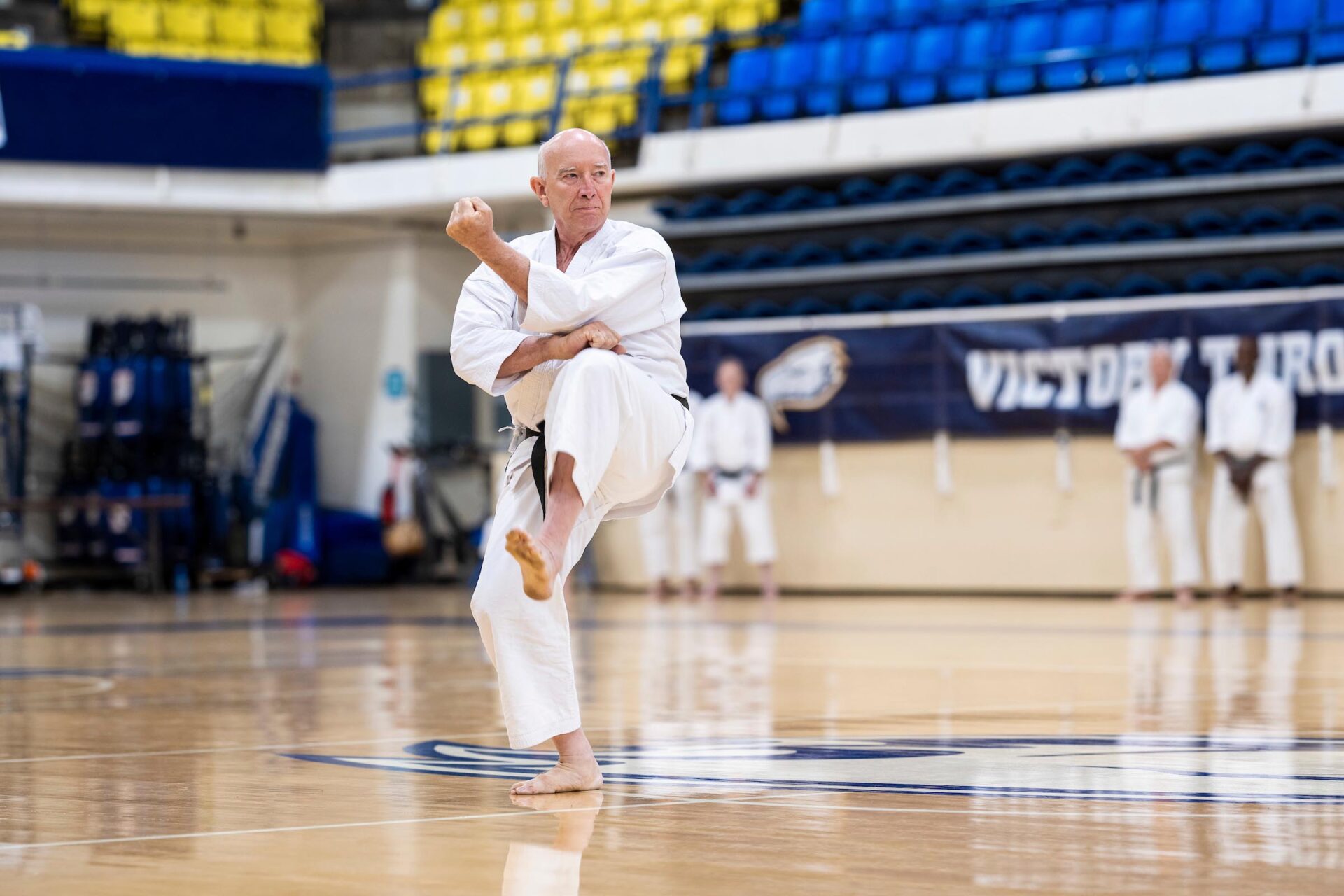
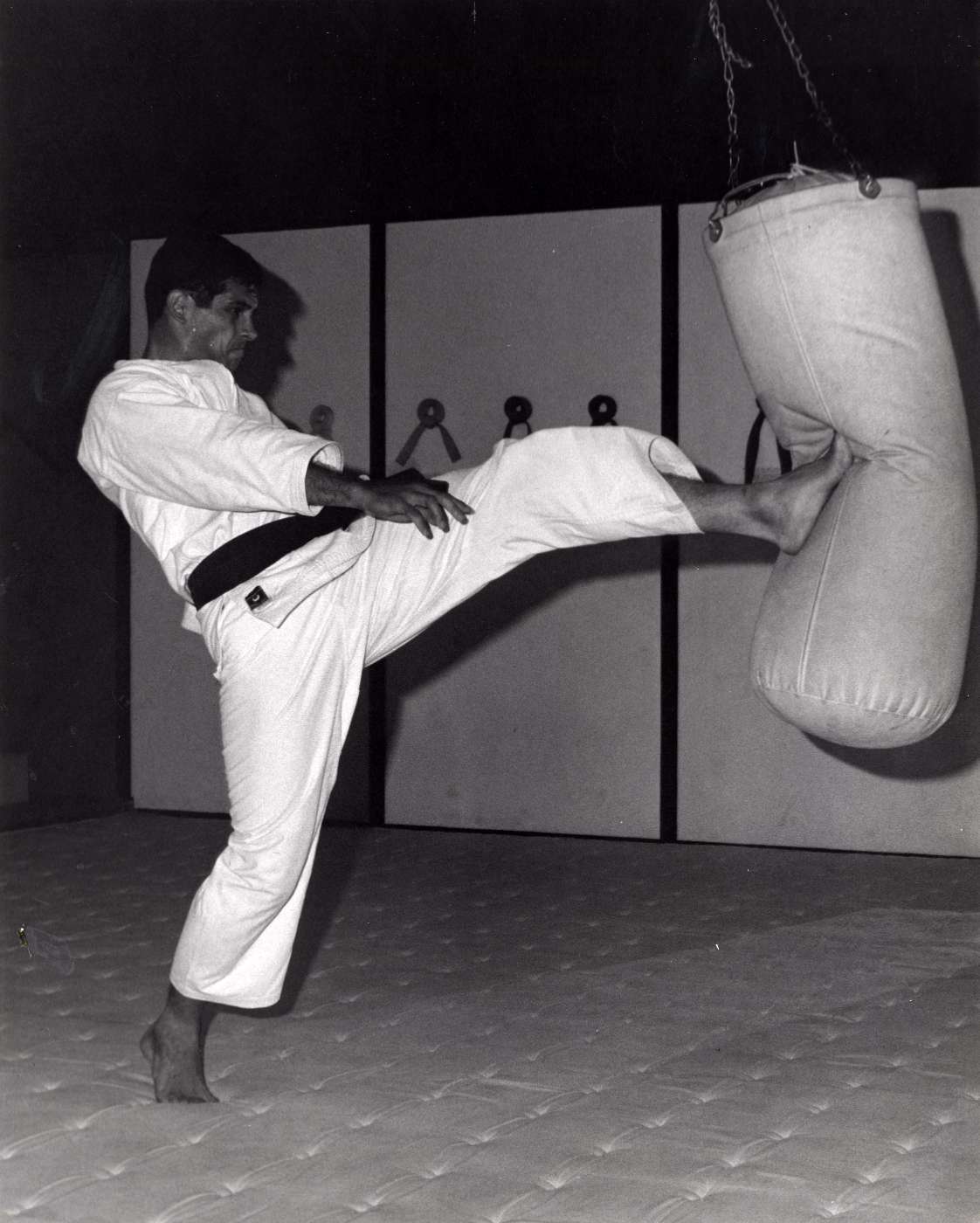
Next, Mr. Ohshima had us do about a hundred yokogeri-keage. This is a
rough estimate. It may have been a few more or less, but it was around
100. While we did these he stressed everything that our seniors stress for
this kick; we need to keep our shoulders straight, we should not make this
a high kick, and we need to get our knees up. I am sure that there were a
few more points, but these are all that I recall. Then he had us do a few
more where we jumped in and did the yokogeri-keage. We were supposed to
concentrate on kicking right when we jumped in.
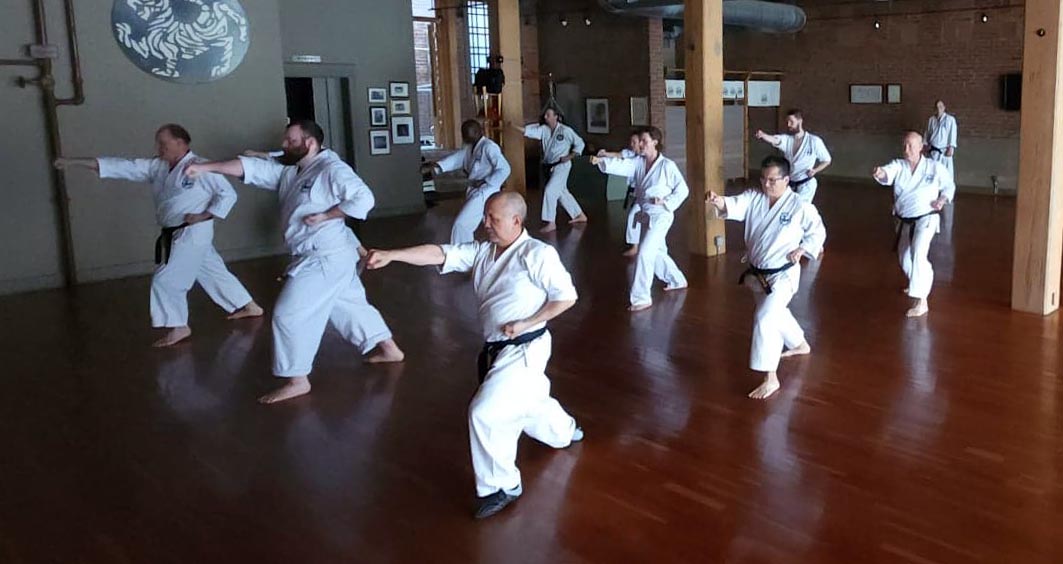
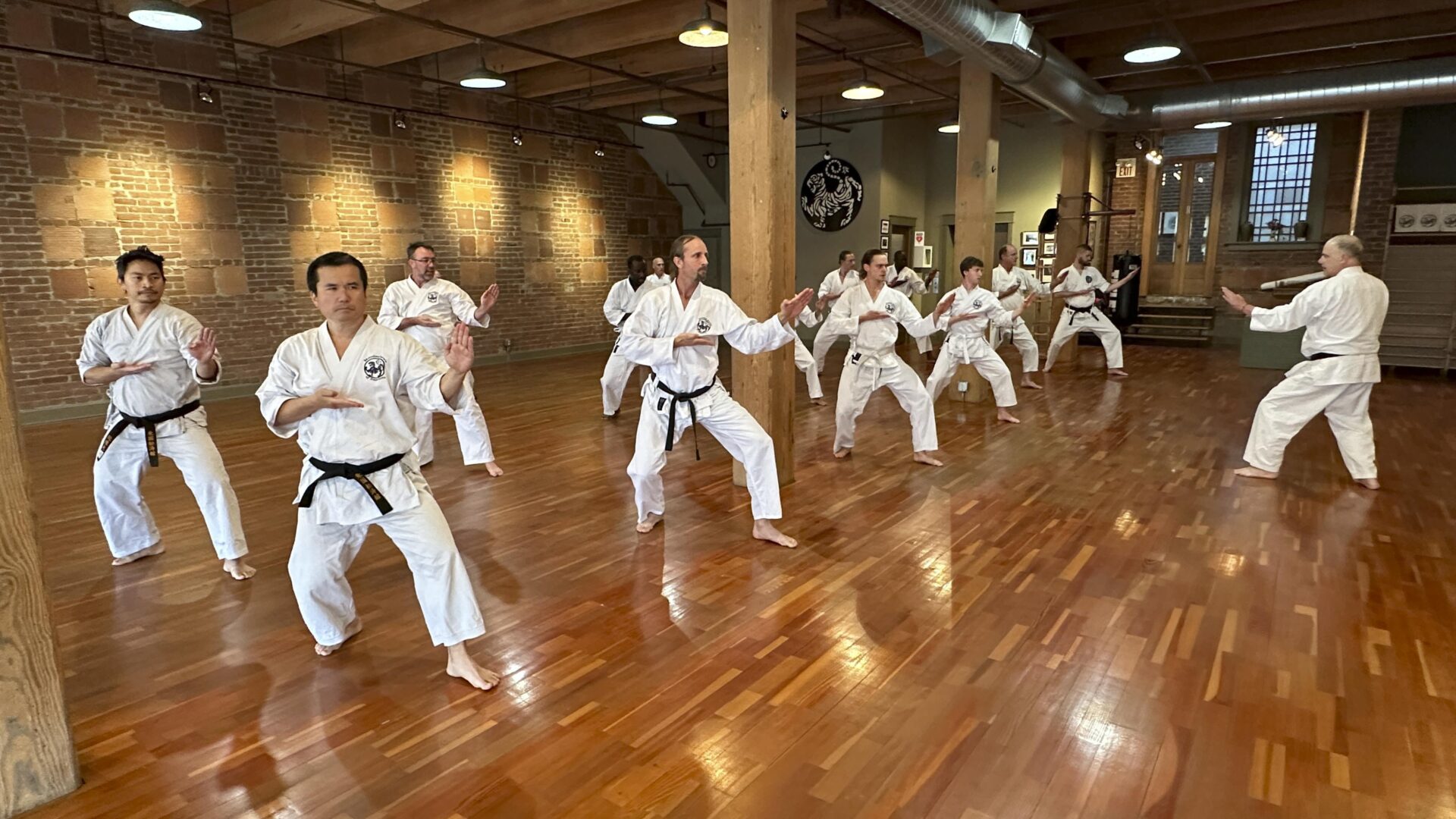
After warming up with these kicks we did a few Bassai. We probably did
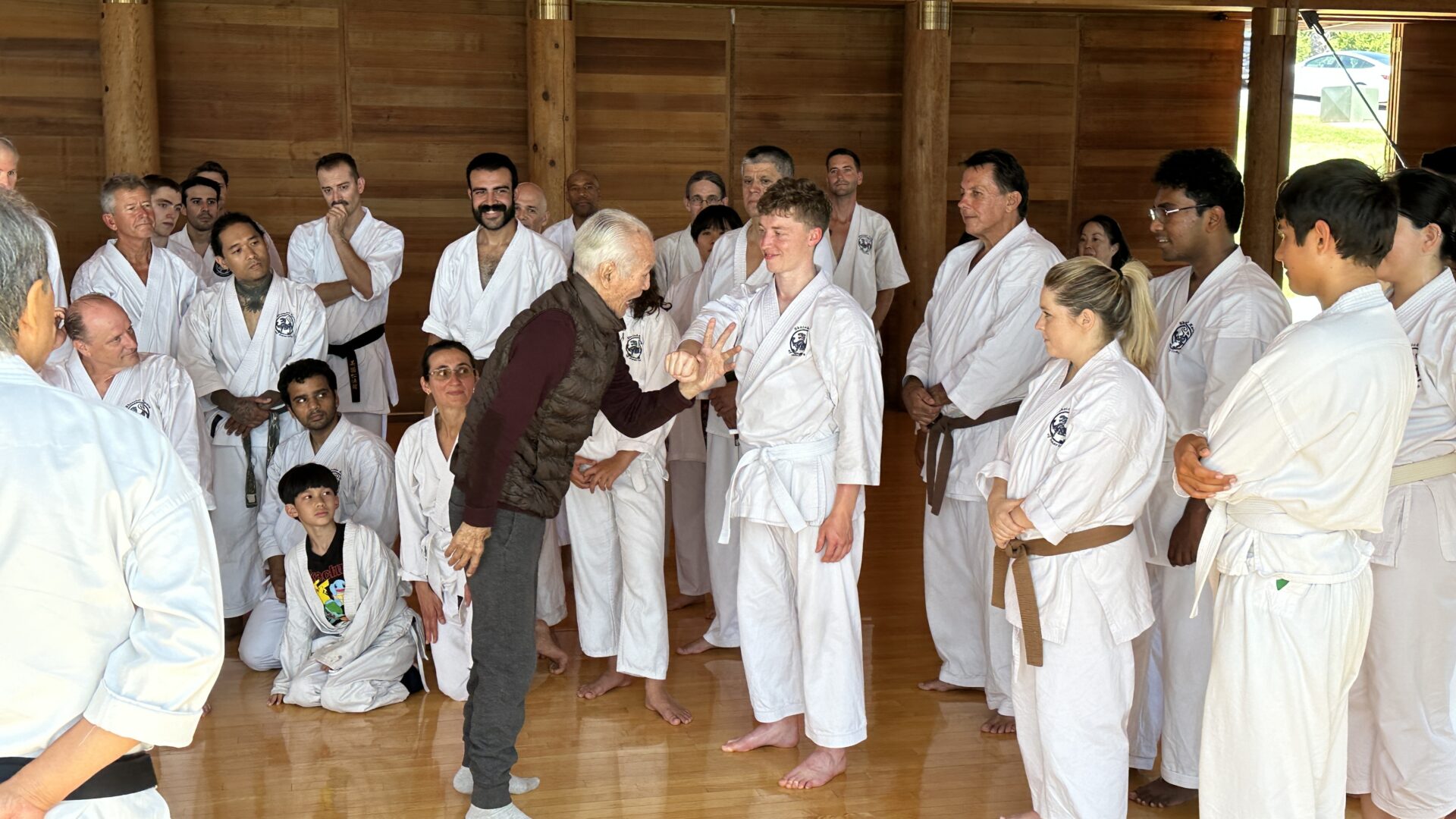
about 5. Then Mr. Ohshima called us to the center and demonstrated a few
things to show us how important it is not to use power in the upper body.
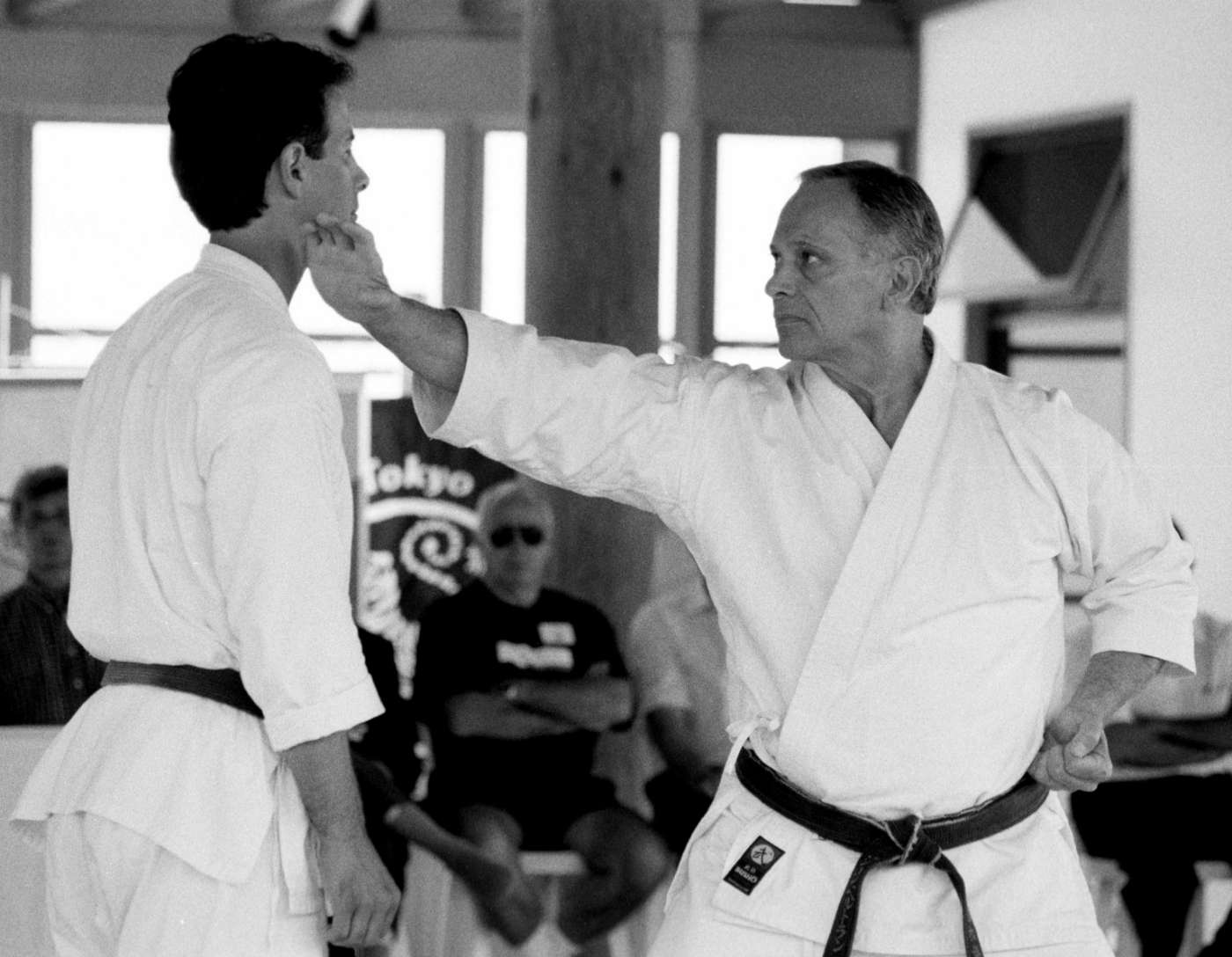
He demonstrated by using a familiar trick, first pushing his hand down
with power to push down somebody's outstretched hand and then just letting
his hand fall with gravity to push the hand down. Of course when he did
not use power he had better results. He then stressed that he wanted
everybody to gain confidence. Humans have a cowardly nature. With
confidence we can overcome this nature and accomplish much more. He also
focused on the importance of diet and exercise.
Next he opened up a forum for us to ask any questions that we have
about Bassai. There were many, many questions. The question that I
remember most vividly was what the exact feeling is with the hands during
moves 18 and 19. This is just before the fumikomi/kiai when you "pass the
right arm under the left arm, and extend it forward in a right arm block."
In this block, your right arm is grabbing somebody's arm and the left
comes down and grabs the wrist and you have control of the arm to come
right away with your fumikomi. After this we did about five more Bassai so
that we could focus on the new corrections and feelings that we had just
learned.
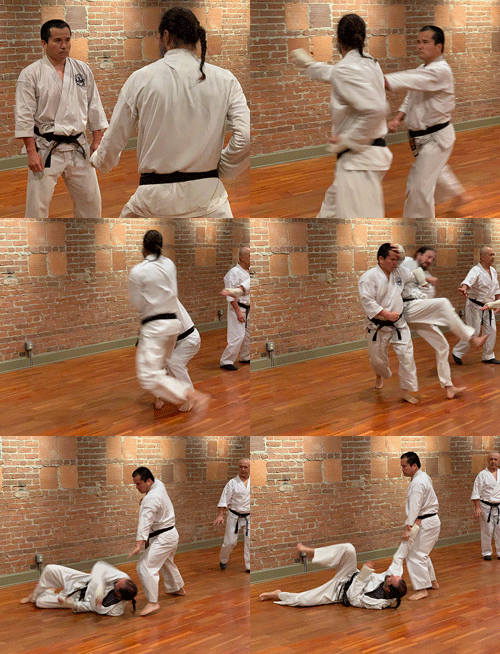
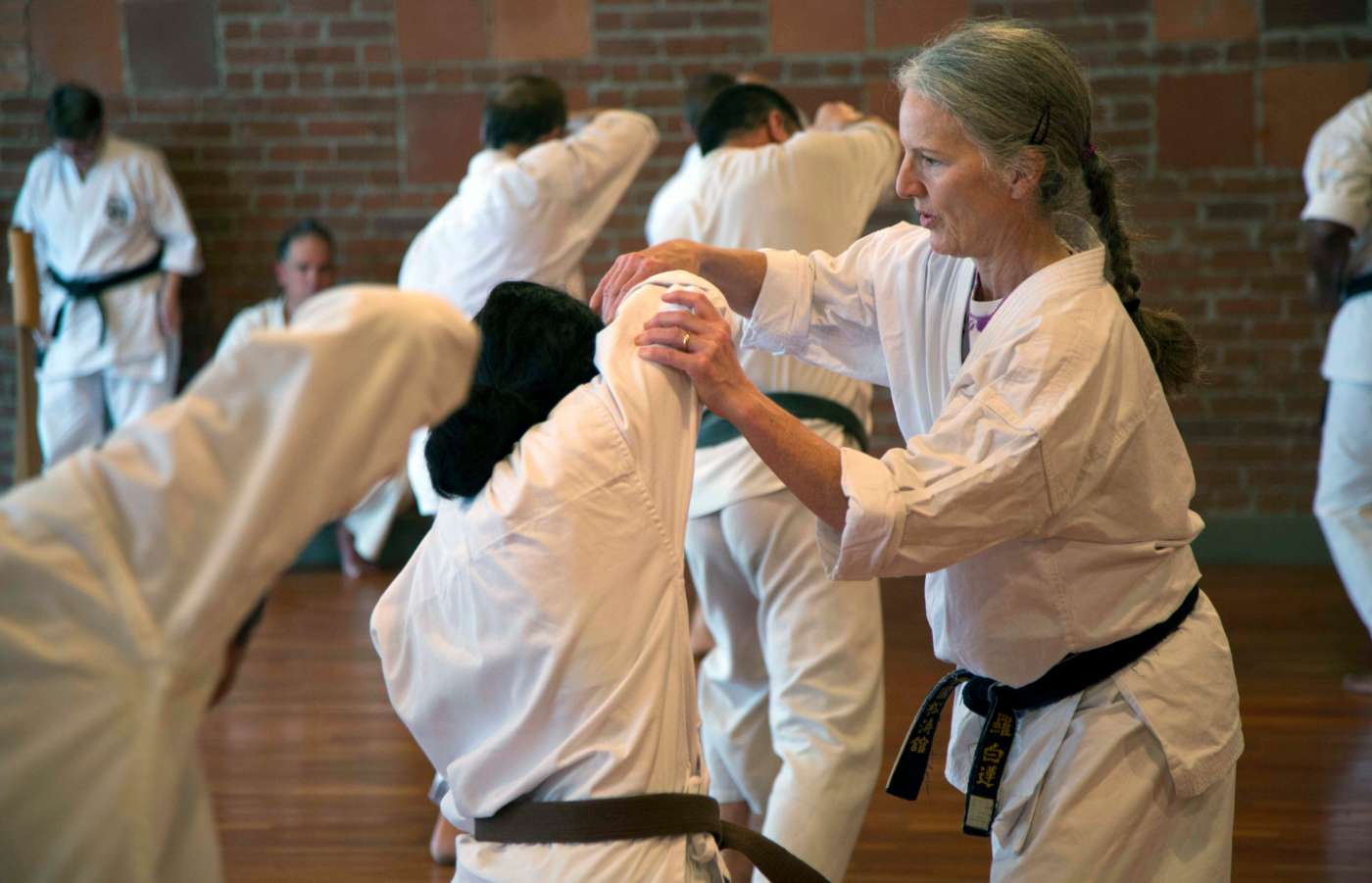
Next he lined us up for ippon gumite. The feeling in this was to stay
in place and just twist our hips to avoid the punch so that the attacker's
punch just grazed our stomachs. We did this against 3 opponents, then we
did sanbon gumite and the feeling was the same. We were only supposed to
move our hips away from the punch with no blocks. Only this time we could
use tai-sabaki. We did this against four opponents. He then called us into
the middle again to emphasize the lesson of these exercises, which was to
keep a close feeling to the opponent. He really wanted us to leave with
the idea that we need to stay in with strong feeling when we kumite. This
should always be the feeling. We should stay in close with a very strong
feeling. Doing this would make it more difficult for the attacker to
penetrate us. He told us that if we always keep a strong feeling, then any
opponent on the streets would be able to sense this and would be more
likely to not even want to try to cause trouble. He has tried this many
times on the streets and one night he saw a drunk man walking by and he
wanted to see if he could impose this feeling on somebody who was so out
of it. He looked at the man with a strong feeling and the man reacted and
made sure to stay out of his way. So even those who are not within reality
can sense when somebody has such a strong feeling.
We then lined up for Mokuso. After this he had the ik-kyus clean the
dojo floor, the ni-kyus clean the meditation rooms on the side and the
san-kyus clean the front entrance, stairs and sitting area of the dojo.
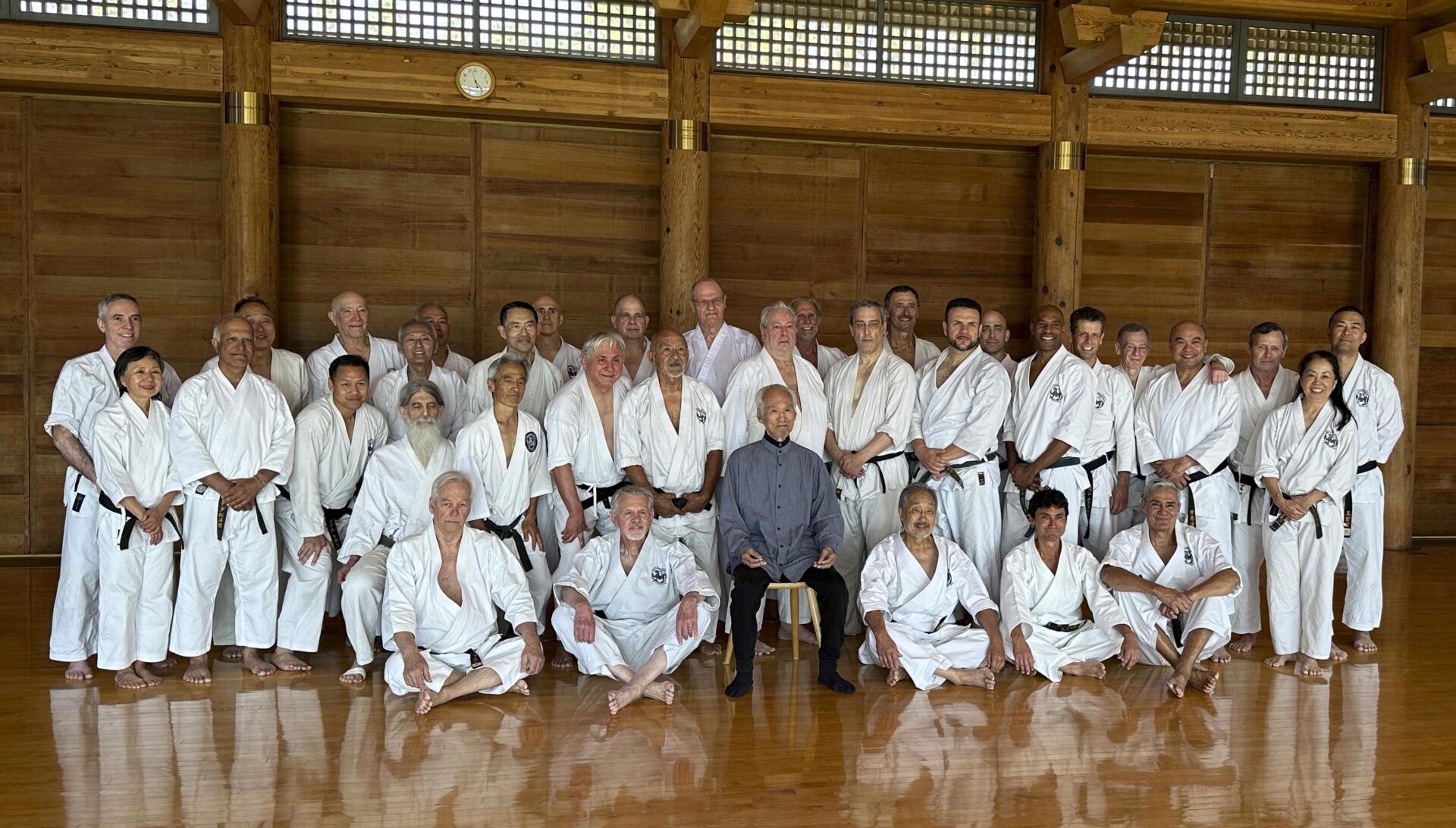
Everybody went to clean right away and we all got to meet other people
from dojos all over. Mr. Ohshima invited everybody over to his house for
tea afterwards. I only got to stay about twenty minutes because I had to
drive to L.A. to catch my flight, but it was wonderful. He said to tell
everybody in Kansas City hello and I thanked him for the practice.
I am very thankful and appreciative for this experience. I would like
to make the disclaimer that this description does not fully capture how
full the practice actually was. I am going by what I wrote down and my
memory, which absolutely cannot capture everything that the practice held.
I wish that my description did it more justice.
Rachel Haughenberry, san-kyu
Kansas City Shotokan Karate Club
|
Ross
Kelson, san-kyu adds:
I think 50 to 60 brown belts attended, mostly from CA.
Bassai: The use of two arms is much more powerful than one, as
in the Movement 1. Mr. Ohshima demonstrated this and also used the example
in tennis of a two handed backhand hit being more powerful.
- Movements 16 and 17 (the last two shuto-uke) are done together very
quickly relative to Movements 14 and 15 (the four sword hand blocks
before the first kiai).
- From Movement 18 (the hand grab) to Movement 19 (the fumikomi and
hands pulling in), the meaning of the hands pulling in movement is to
release the opponent's hand, grab his gi, and keep him from getting away
as you crush his thigh. This helps me because there is no explanation in
Karate-do Kyohan of the meaning for the pulling in movement.
- In Movements 33 through 37, the three high and low strikes are
punches. Don't make them something else.
- Movement 41 (the next to the last Movement) can be grabbing the
opponent and throwing opponent to the right.
- Gyaku-zuki: keep your shoulders rounded through the movement and at
the end.
Mr. Ohshima spoke about where maximum power comes from in the same way
as my instructors have taught me (relaxation, focus at the point of
contact, breathing). While Mr. Ohshima was demonstrating proper breathing
technique, I began to imitate his breaths. At one point he was speaking in
one long exhalation. I ran out of breath before him, and I was not even
speaking.
He said that karate is not about beating each other up. It is about
building strength of character, mental power, finding your full potential.
After sambon-gumite, Mr. Ohshima said if you have red marks on your
stomach from glancing blows, that's okay--you did not get hit straight on.
Mr. Ohshima reminded us that we cannot test for Sandan without doing
5000 Bassai. He said that when Dusty DuPree was ready to test for Sandan,
Mr. Ohshima asked him how many Bassai he had done. Dusty answered 4500.
Dusty did not test that year. Mr. Ohshima said that you may be able to
trick him or your instructor, but you cannot trick yourself. He finished
with a few more comments of the importance of
After practice, Mr. Ohshima invited his students to have tea in his
house.
He continued to speak philosophically. He said there are three
tragedies in life: parents losing their children, a spouse losing his/her
spouse in middle age, and a child growing up with a lot of money at
his/her disposal.
He continued that heaven is being a leader with followers who learn,
and gain happiness being around their leader.
Throughout, Mr. Ohshima was in good spirits and joked frequently.
Of course there was a great deal more to the practice than described
here.
Mr. Ohshima made many points of reinforcement to that which I've
learned from my instructors. In each of the dojos where I have practiced,
I notice the precise level of consistency in instruction. I think this is
a testament of the level of discipline and loyalty we have within SKA.
"The Way: Who will pass it on straight and well?" From my junior
eyes, my seniors are. Thank you.
Ross Kelson, sankyu
Kansas City Shotokan |