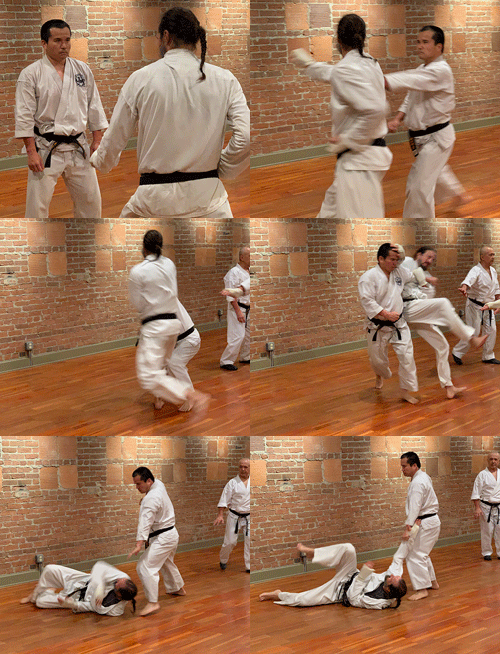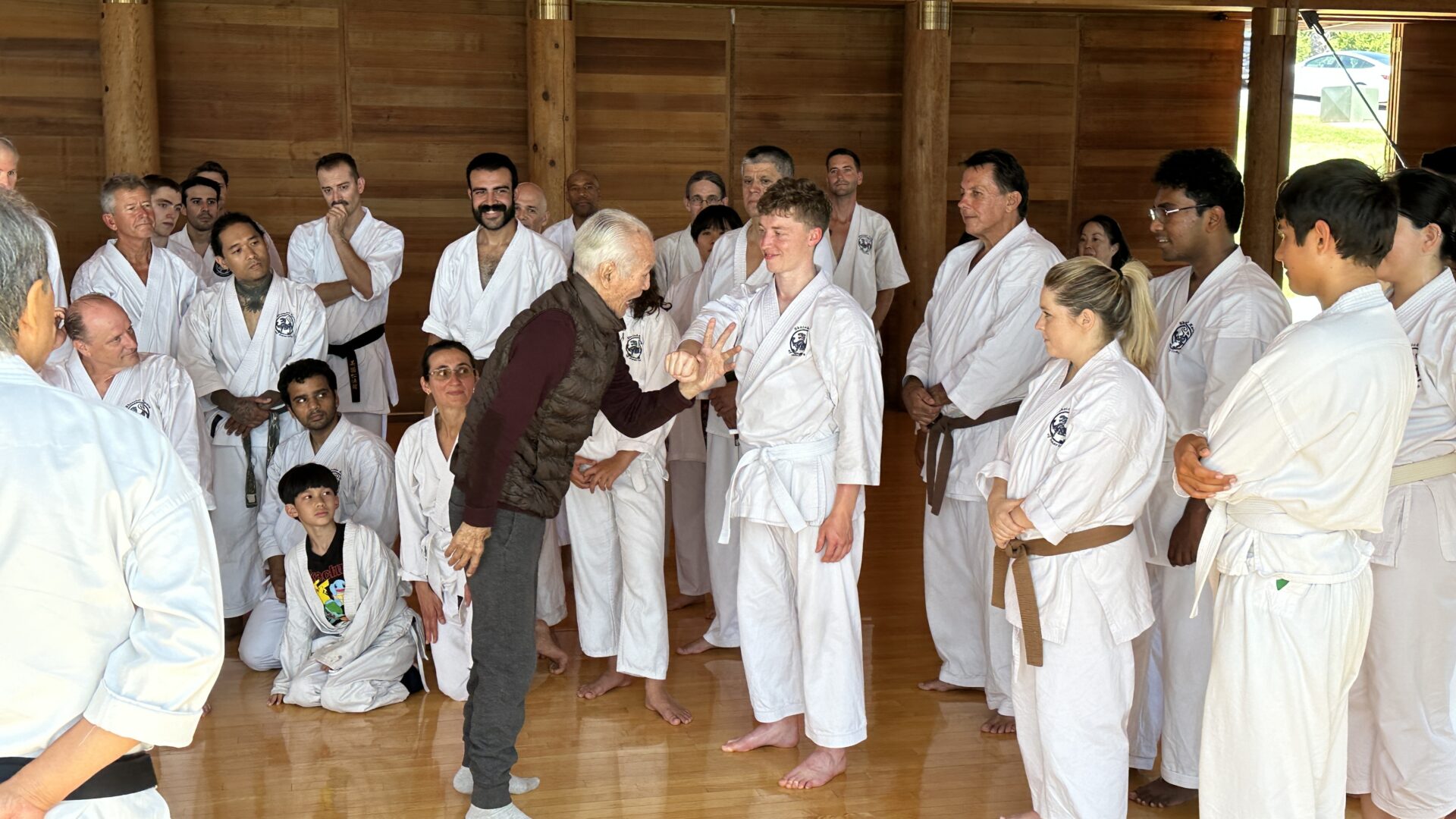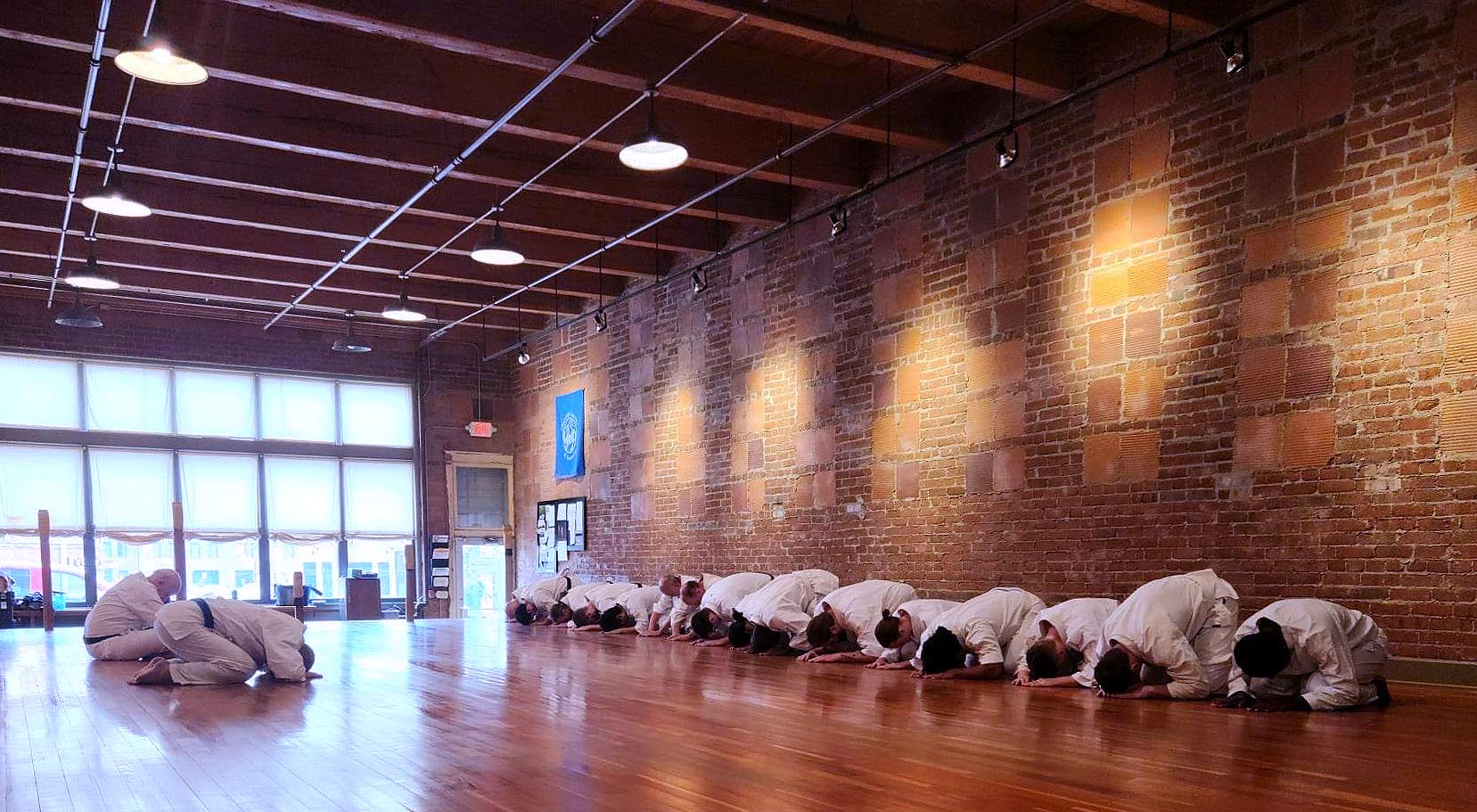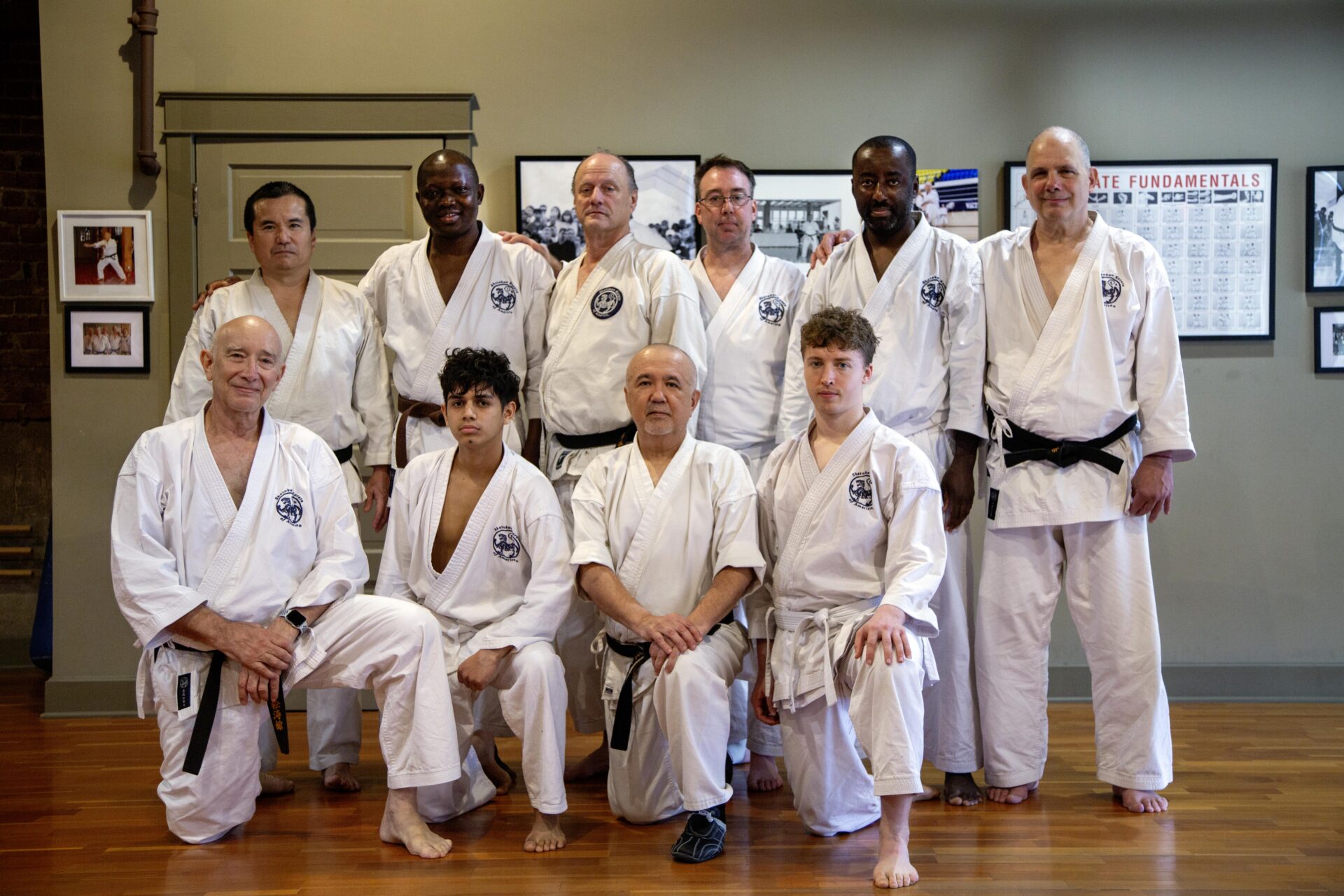
Norman Welch (with Curt Wvong) demonstrates suwari-waza at
Shotokan Ohshima Dojo Dec. 2, 2007 (00:01:17 - 1.5mb)
Torite means 'escaping'. It is the kihon portion of sandan testing in
SKA.
An important component of torite is suwari-waza: sitting and kneeling
techniques.
If you have not explored this sort of technique and you would like to
discover something important, then I recommend this as very good practice.
Sit and stand. To sit: Heels together, toes apart. With spine
vertical (don't lean forward), slowly sit -- one knee
touches ground, the other knee touches, the toes relax so instep is flat,
the hips drop between the heels. To stand: hips rise, toes go under (ball of
foot on ground), one knee up, then the other knee up, then stand with back
vertical. Repeat, Alternating which knee touches
first as you kneel, and which lifts first as you stand. If you lean forward,
your opponent might punch your face.
Kneeling Oi-zuki. From seiza (with toes relaxed and instep flat on
ground), slide one knee and hip forward while keeping hips as low as possible.
Big toes remain touching until back toes are in position with ball of foot
under the hip. Like back stance, hips and shoulders nearly parallel to punch. Slide
forward to seiza. Repeat, alternating sides.
Open to side. From seiza, keep hips low as possible and open
one leg to the side while pulling toes under so ball of back foot is firmly
into the ground. Opponent grabs your wrist. Release your wrist and
establish wrist lock. Control opponent to the ground. Repeat, alternating sides.
Open to rear (kaete). From seiza, with hips firmly in trough of
heels, make open hand age-uke with one arm. After block is complete, grasp
opponent's wrist, pivot (when first beginning, try pushing leg to rear in
order to initiate pivot -- as you become accustomed to this, simply pivot) to face the rear while drawing
wrist to hip and pulling toes under so ball of standing leg foot is firmly
in the ground and opponent is thrown. Sit back into seiza and repeat, alternating sides.
Continuous kneeling oi-zuki. From basic kneeling oi-zuki, slide forward,
drop front knee to ground and pivot on it with toes curled under to make
opposite side punch. Repeat. Try to feel very relaxed in the hips, allow hips to rotate fully with each punch and exaggerate the
stretching of the quads and groin. Don't emphasize the punch --
emphasize full range of motion of low hips. This should feel very free with
practice.
The exercises above are the ones which I have found most valuable. I
also practice several kicking forms from seiza:
Mae-geri (not illustrated in video) -- while seated in seiza, and without
raising hips,
slide kicking knee forward and up, making front kick while pivoting on the
standing knee and pulling toes under so ball of foot is firmly on ground
by end of kick.
Repeat, alternating sides.
Mawashi-geri -- while seated, keep knees in place and drop
shoulders toward ground and place hands together on ground far from the hips and straight out to the side.
Only after weight is firmly on the hands, let hip 'snap' into alignment with
shoulder raising knee and making kick with toes of standing foot curled under
so ball of foot is into floor. Repeat, alternating sides. Don't over-rotate.
Yoko-geri kekomi -- while seated, drop body straight back, turning
to place hands together on ground almost
straight behind. After weight is firmly on the hands,
allow the hip to turn and bring kicking knee all the way to your shoulder and
standing toes curl under so ball of foot is planted on ground. Watch opponent
from under your arm and extend kick, then draw knee back to shoulder and
return to sitting. Repeat. In this kick, the hands become the 'back heel' and
the kick extends from the hands. Don't tighten up.